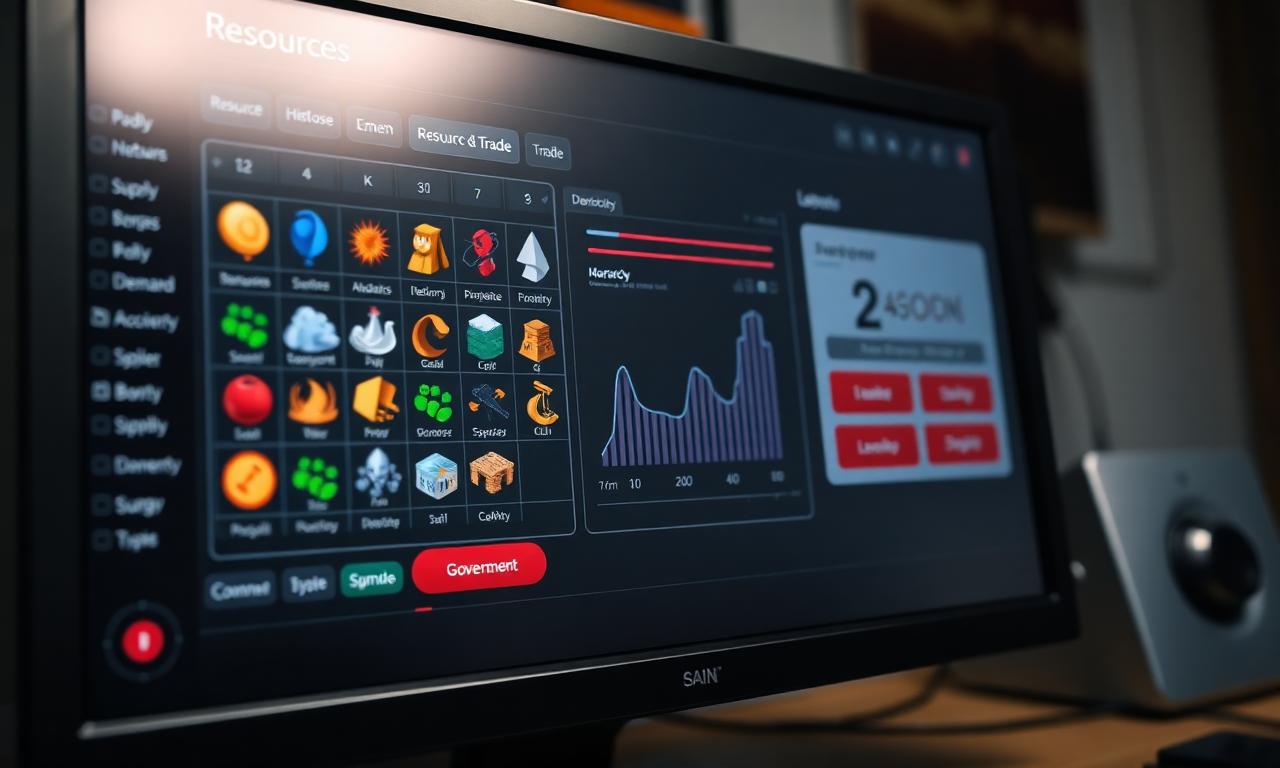
A homeschool economics game with real budgets, real tradeoffs
SFC Nations turns economics from an abstract subject into something students feel. They set tax rates, manage 32 resources, negotiate trade deals, and learn what happens when a budget doesn't balance.
Real budgeting: gross income, tax revenue, military maintenance, deficits
Trade with 8 AI nations using 5 agreement types
Supply and demand modeled with 32 different resources
Comparative economic systems through 20 government types
Daily play — no marathon sessions required
Free, no installs, runs in any browser
Inside the game
Income, taxes, deficits32 resources, supply and demandLong-term planning tradeoffs
Do this together right now
Economics: play together in 60 seconds
Run this together: match the term to its meaning, then take the quiz. Five minutes total — fresh items each replay.
Preview: This quick match + warm-up quiz is a small taste of what's inside the full Economics lesson plan you can download below — expect more activities, discussion prompts, and assessment rubrics in the same style.
Match the economics term to what it does
0 / 5 matched
Tap a term, then tap its definition.
Term
Match
Economics concepts your student will actually use
Budgeting and deficit management. Tax policy and the Laffer curve in action — raise taxes too high and watch revenue fall. Trade, comparative advantage, and tariffs. Inflation pressure when government spending outruns growth. Resource scarcity and substitution.
Built for real homeschool schedules
Game time runs at 1:1 real time. A student logs in for 15 minutes, collects taxes, reviews their resource trades, and logs off. The economy keeps developing even when they're not playing — which models real economies better than any pause-able sim.
Pairs naturally with personal finance
Students who grasp national budgeting tend to grasp household budgeting faster. Several families use the game alongside a personal finance workbook for a complete economics block.
Frequently asked questions
Does it teach personal finance or macro?
Primarily macro and policy, with budgeting transferable to personal finance.
How fast do students see results?
First budget cycle is in 24 in-game hours. Real understanding usually clicks in week 2.
Any prep work for parents?
None required. The game teaches itself through tradeoffs.