
Forms of government
From democracy to monarchy to anarchy, each type carries stat effects that model real strengths and weaknesses.

Grades 5-12
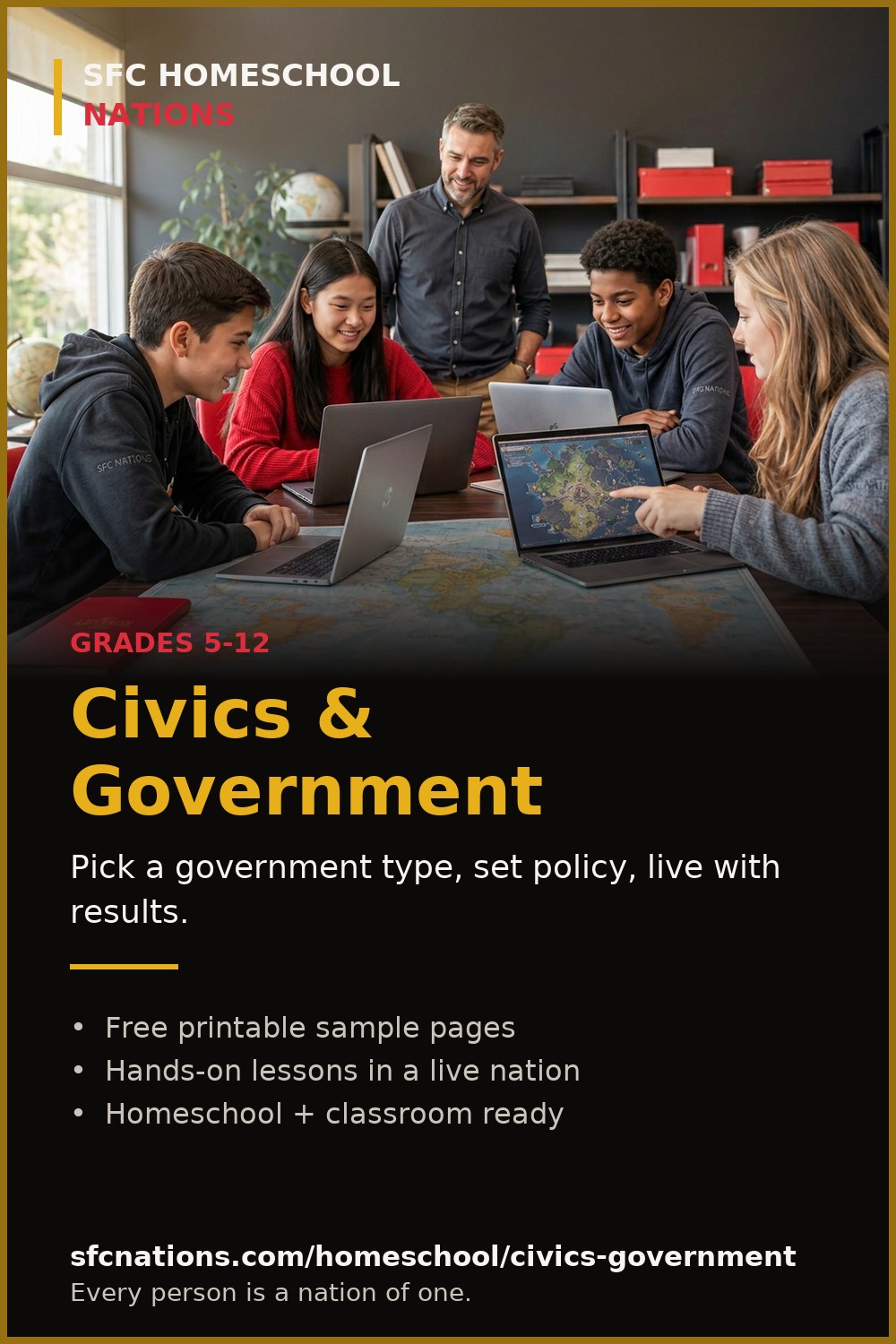
Twenty government types and the consequences of each.
Civics is usually taught as vocabulary. Here students choose a government, live inside it, and feel what it does to freedom, growth, and stability. Switching from democracy to monarchy is a lesson no worksheet delivers.
Download the sample PDF (free)3 printable pages · no account needed · see the sample pages first
Share Civics & Government
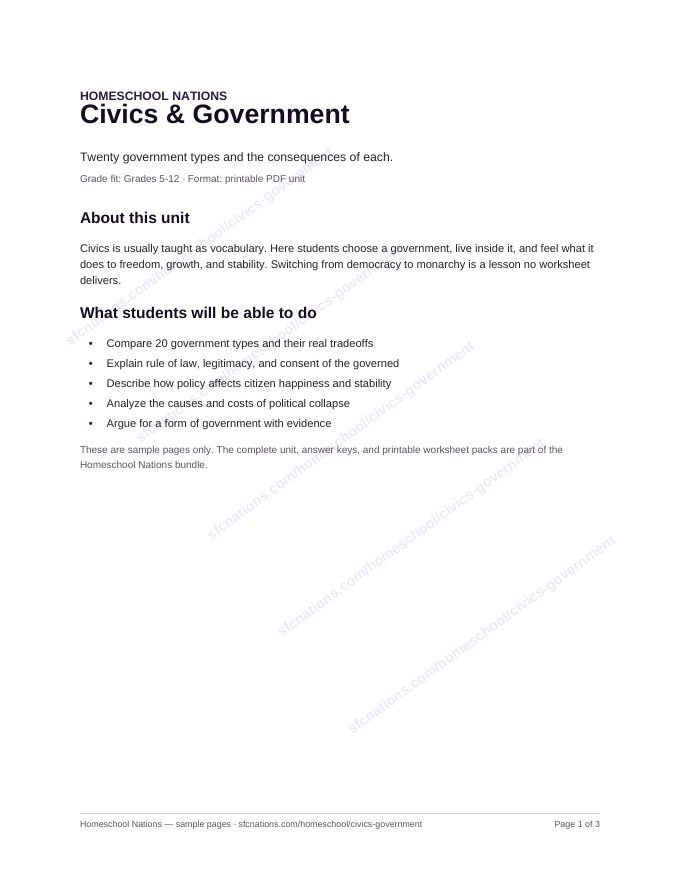
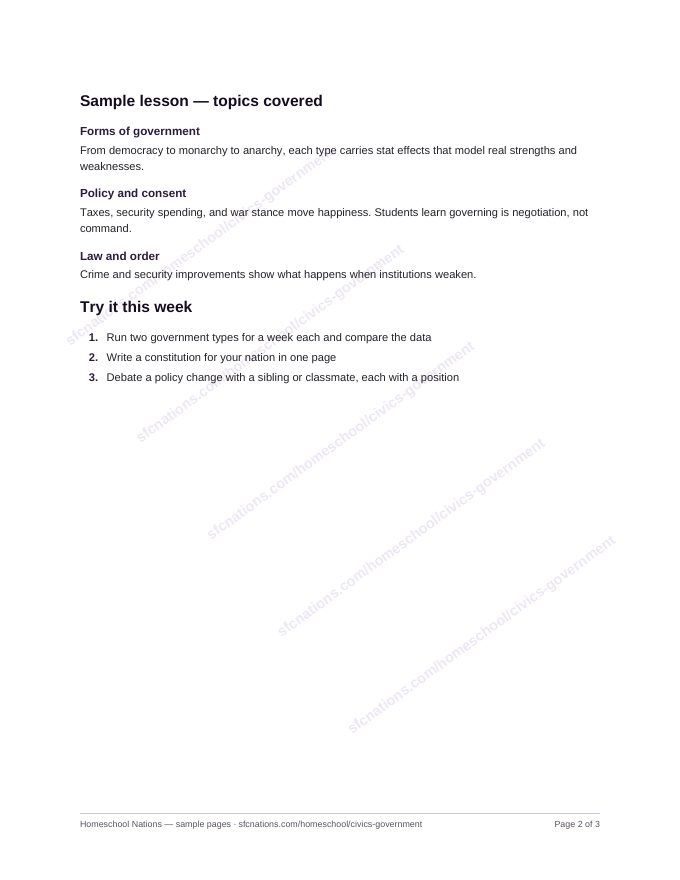
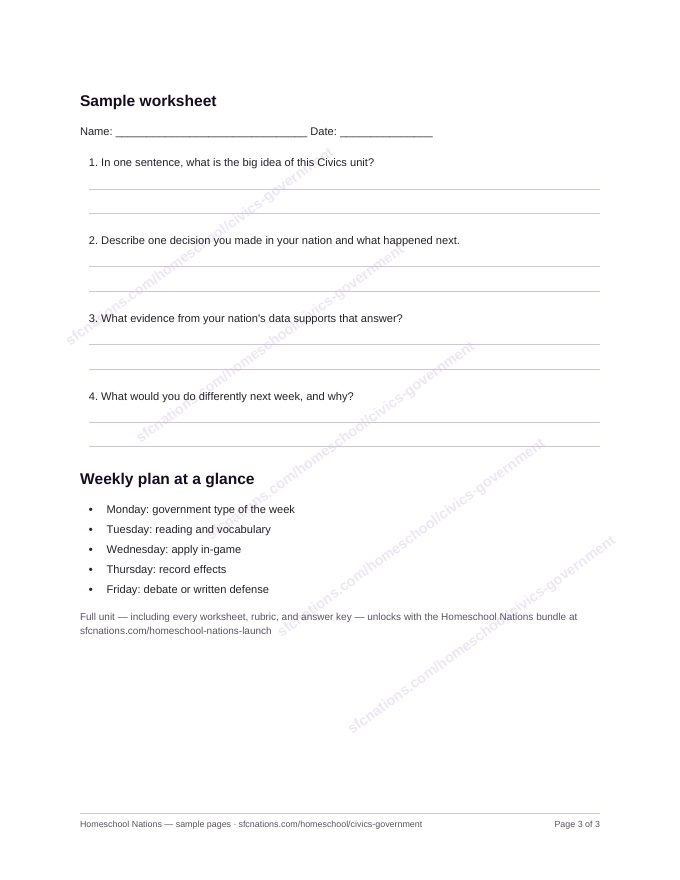
Three printable sample pages from the Civics & Government unit: the unit overview and learning goals, a sample lesson, and a student worksheet with the weekly plan. Free to preview, print, and use with your students right now.
The complete unit, every worksheet, rubrics, and answer keys are available now in the Homeschool Nations curriculum packages.
From democracy to monarchy to anarchy, each type carries stat effects that model real strengths and weaknesses.
Taxes, security spending, and war stance move happiness. Students learn governing is negotiation, not command.
Crime and security improvements show what happens when institutions weaken.
Anarchy has a real cost and a real recovery path, which teaches stability as something earned.
No. Government types are modeled by mechanics, and families supply their own values discussion.
Partly. The USA Coalition content plus the civics curriculum page covers U.S.-specific structures.
Yes, families often log it as a half-credit civics course with written work.
The complete Homeschool Nations curriculum bundle and standalone digital book are available to purchase and download now.